
 EUR | €
 SEK | kr
 NZD | $
 CAD | $
 EUR | €
 AUD | $
 USD | $
 GBP | £
NEW
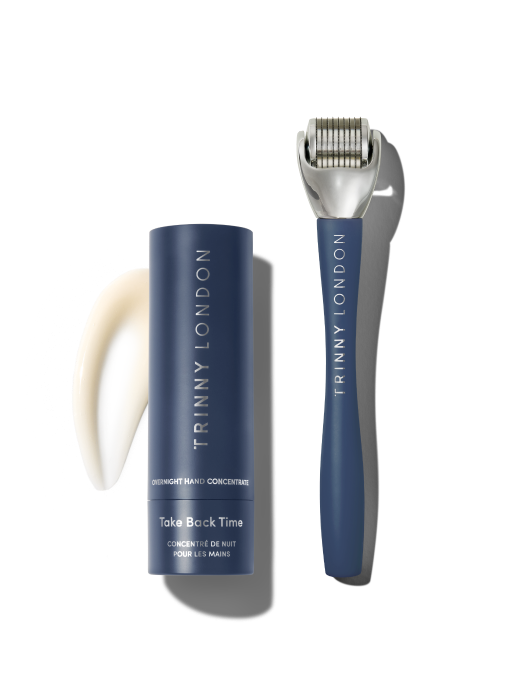
HAND CONCENTRATE + 0.5MM MICRONEEDLE
Take Back Time Overnight Hand Transformation
A global-first overnight concentrate and microneedle set

Look at your skin at 8am compared to 8pm. Notice a difference? That isn't just the toll of a long day or the relentless glare of a computer screen – it’s your biology at work.
Have you ever wondered why your skin looks suddenly parched when the clocks change, or why a single night of restless sleep shows up instantly on your face? So, what is a circadian rhythm? Simply put, it’s your body’s master 24-hour internal clock. Running quietly in the background, it controls everything from when your core temperature drops to when your skin shifts from defence mode to repair mode.
Understanding the rhythm of your own biology isn't just about sleep hygiene – it is the single most effective way to make your skincare work harder for you.
Your circadian clock doesn't just react to daylight and darkness. It is deeply tuned into internal factors like natural hormonal shifts, cortisol spikes, and cellular stress.
To understand how to care for your skin, it helps to understand what actually happens across a typical 24-hour cycle:
Morning (6am – 12pm): The Shield Goes Up
As daylight hits, your body spikes cortisol to wake you up. Blood flow to the skin is lower, and sebum (oil) production begins to rise to form a protective layer. Your skin barrier is at its strongest right now to protect against UV exposure, pollution, and daily stress.
Afternoon (12pm – 6pm): Peak Oil & Sluggishness
Sebum production reaches its daily peak around mid-afternoon, which is why your T-zone might suddenly look shiny. Micro-circulation slows down slightly, which can leave skin looking a little flat or fatigued by late afternoon.
Evening to Night (6pm – 11pm): The Barrier Weakens
As natural light fades, your body releases melatonin to signal sleep. Blood flow to the skin increases sharply, bringing fresh oxygen and nutrients to the surface. However, your skin barrier also becomes more permeable and skin temperature rises – meaning moisture evaporates quickly, but active ingredients can penetrate far deeper.
Deep Night (11pm – 4am): Peak Cell Renewal
While you sleep, cell division and DNA repair hit their absolute peak – growing up to eight times faster than during the day. Your skin actively sheds dead cells, synthesises fresh collagen, and repairs damage from daytime environmental stress.
By reading rhythms like these, we stop fighting our skin and startsupporting it. Knowing your internal rhythms allows you to deliver high-performance ingredients precisely when your cells are open, receptive, and ready to rebuild.
How does your body's circadian rhythm affect skin repair and ageing?
Cell division, turnover, and DNA repair naturally peak at night. When your internal clock is disrupted – whether through stress or poor sleep – your skin loses its vital window for self-repair, which can accelerate visible signs of ageing like loss of elasticity and persistent dullness.
What is the best time of day for skin treatment to maximise results?
Evening is the undisputed best time for rich, restorative treatments like Take Back Time Overnight Hand Transformation. Skin barrier permeability rises at night, meaning active ingredients penetrate more effectively just as your cells are primed to regenerate.
Can nighttime microneedling boost collagen production while you sleep?
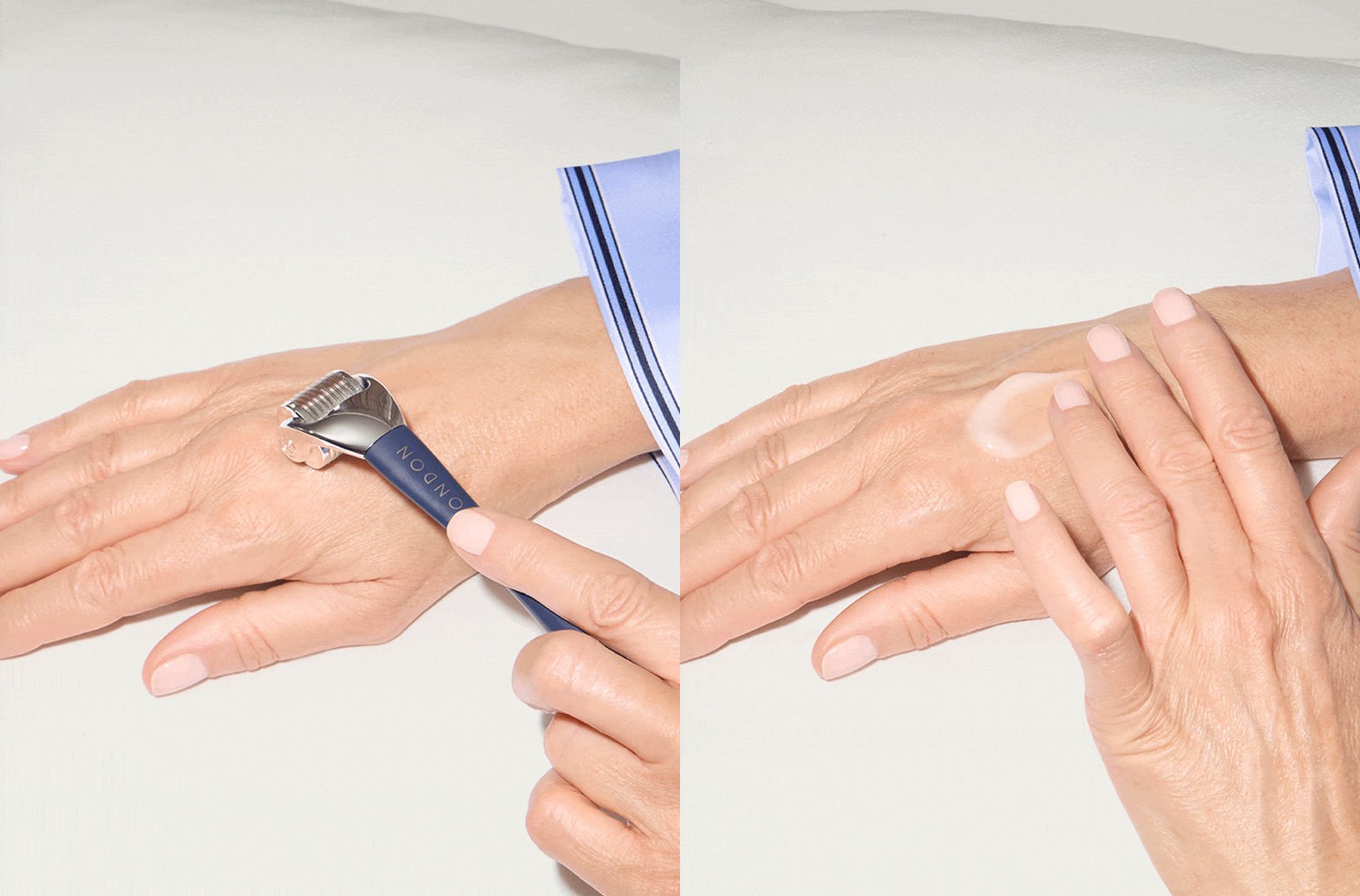
Yes. Microneedling creates tiny micro-channels in the skin to stimulate a natural repair response. Performing this in the evening pairs directly with your body's peak overnight renewal cycle, maximising collagen synthesis while you sleep.
Why do crepey hands show age faster, and how does circadian skincare help?
Hand skin is inherently thin with very few oil glands, making it exceptionally prone to rapid moisture loss – especially overnight. Applying intensive, collagen-boosting treatments before bed works in tandem with your nighttime repair cycle to rebuild density and smooth out texture.
Shop the article
A global-first overnight concentrate and microneedle set
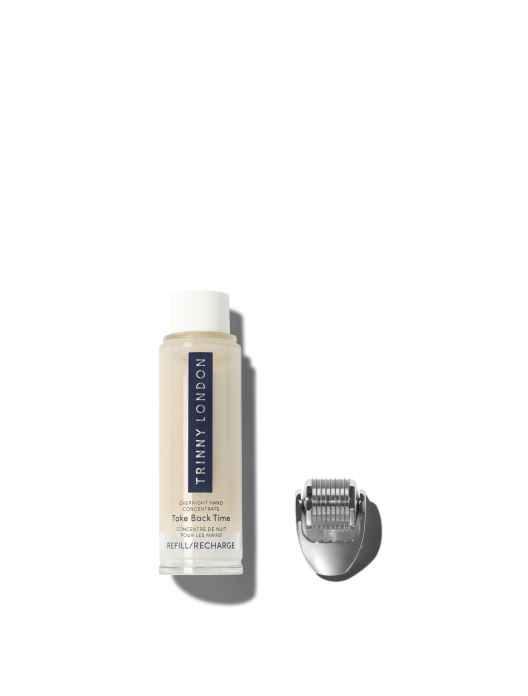
A hand concentrate refill and replacement microneedle head